
Lower Prices, Lower Proofs: The New Trend Bringing Bourbon To The Masses
With the bourbon base pulling back from purchasing, brands need to expand to wider audiences to continue growing. To do that means coming to market with more approachable products.

I got a hot tip that led to an even hotter pour. While filming my New Orleans “What’s Under the Table” segment with Barton 1792’s Ross Cornelissen, he casually produced a 15.5‑year single barrel that had spent its entire life sweating it out on the top floor of a Bardstown rickhouse.
It clocked in at 154 proof. Fiery, yes, but not the most extreme hazmat (Bourbons north of 140 proof) I've seen. That honor belongs to a Distillery 291 single barrel picked by Fred Minnick’s Club Marzipan at 172.2 proof. I have rubbing alcohol in my cabinet, that’s embarrassed by that number.
Bourbon culture has treated proof like a high score. The higher it goes, the higher the hype. George T. Stagg at 142.8? A must get. Lost Lantern’s Day’s Defile at 154.4? Sign me up. Five batches of Jack Daniel's Rye, all at Hazmat proof? Break the Internet.
Even everyday bottles are bulking up. Sazerac Rye and Green River now offer full‑proof versions. Buffalo Trace’s Traveler Whiskey decided that if we were ho-hum about the original 90 proof, the solution must be to ratchet up the proof. Maybe they should have kept going once they hit blend #40.
Now there are exceptions (looking at you, Michter's), but the logic is simple: less water, more flavor and complexity. We often cite proof as the difference between middle-of-the-road and exceptional whiskey.
But beneath this roar of high-proof releases, a quieter counter-trend is gaining ground: lower-proof, more accessible bourbons.
What’s surprising is that this movement is led by smaller craft brands, lowering not just proof but also price points. Let’s dig into the factors behind this shift and what it means for these brands.
I spoke with a variety of brands, all of which recently released new expressions that reflect this trend:
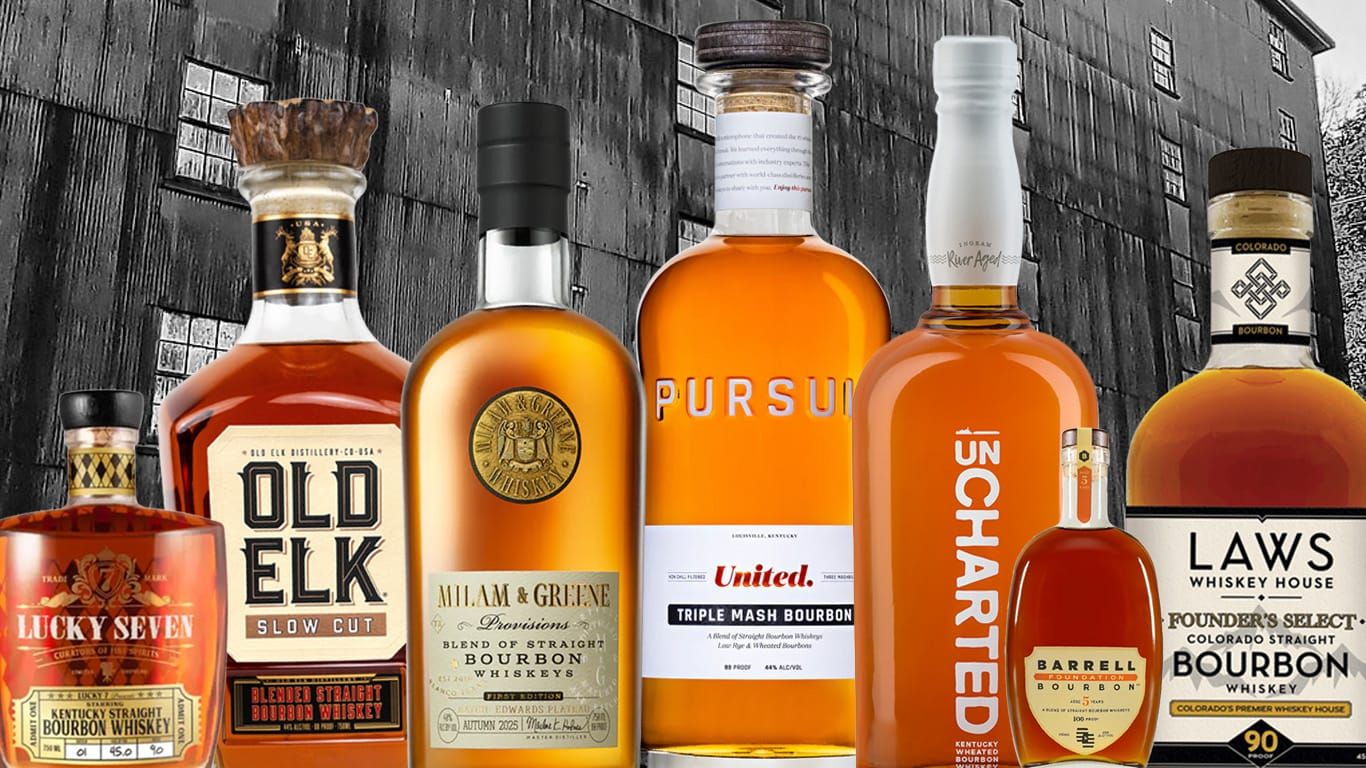
Al Laws, Laws Whiskey House: Laws Whiskey House Founder's Select (90 proof, $40 MSRP)
Kenny Coleman, Pursuit Spirits: Pursuit United Triple Batch Bourbon (88 proof, $40 MSRP)
Hank Ingram & Scott Beyer, O.H. Ingram: Uncharted Bourbon (92 proof, $40, MSRP)
Michael Lahalih, Lucky Seven Spirits: Lucky Seven Small Batch (90 proof, $40 MSRP)
The Spending Shift
Economically, today's bourbon drinker isn’t spending like they did during the boom years.
“People just don’t have as much disposable income,” says Al Laws, “Super‑premium price points fell off first… inflation ate away all those [COVID-era] gains in their income.”
Inflation isn’t just hitting wallets at the gas pump; it’s also creating a pause at the liquor store shelves. Consumers are becoming choosier about the bourbon they purchase.
“We listened to our retailers- many of whom told us they were having a tough time moving $100+ or even $80+ bottles. People just aren’t paying those high prices as frequently anymore. That feedback came directly from the street,” says Lahalih.
Expanding to Wider Audiences
With the bourbon base pulling back from purchasing, brands need to expand to wider audiences to continue growing. To do that means coming to market with more approachable products.
An 88-proof bourbon may not excite readers of this website, and Kenny Coleman of Pursuit Spirits acknowledges that in their Pursuit United Triple Batch,
"It's likely not for anyone reading Bourbon & Banter, although we do enjoy it ourselves. This product is for the 90% of consumers we haven't reached yet."
Laws Whiskey House tested a lower proof expression with Ralphie’s Reserve, a 90-proof bourbon aimed at Colorado University fans. The move successfully attracted new bourbon drinkers and boosted brand awareness. That CU partnership later helped Laws develop their Founder's Select.
Beyond retail, lower proof and price also win in bars and restaurants.
Ingram Uncharted was developed for bartenders to use on-premise. In developing Uncharted, a 92-proof wheated bourbon, the Ingram team took multiple batches to Tales of the Cocktail, let bartenders try it, and listened to their feedback. Uncharted's recycled glass bottles are also designed to be behind the bar, with necks that accommodate pour spouts and a bartender-friendly 1-liter capacity.
The Production Reality
Producing more accessible spirits isn’t easy. While lower proof can increase bottling yield, smaller brands and NDPs still struggle to scale efficiently compared to larger distillers. "The bigger guys who do have their own still, they are producing it at a lower cost ...we are working with a higher cost model than our competition," says Hank Ingram.
Creating lower-proof, affordable bourbons requires more barrels to blend batches large enough for distribution. Laws Whiskey House had to wait until inventory grew enough to "look at different places on the price pyramid." It makes sense: high-proof releases are usually limited and can command higher prices, while lower-proof, lower-price bottles need scale to turn a profit.
Packaging gets simplified, too. Bottles like Ingram Uncharted and Laws Founder Select are noticeably simpler and use more generic bottle glass, which most likely keeps costs down.
And blending? Still a challenge. Lucky Seven’s Michael Lahalih notes that blending is still important in the process: “Our Master Blender, Ashley Barnes, spent several months tasting and testing multiple barrels until she struck the perfect balance of flavor. Only then did we move forward with bottling.”
So What Does It All Mean?
While some of us get excited about cask-strength releases pushing past 140 proof, it’s important not to dismiss the bourbons crafted for a broader audience. While it may be a reaction to current economic times and a search for growth, bringing in more folks into the bourbon scene is a good thing. In the end, it means more people to enjoy a bourbon with, and it shouldn't matter what the proof in the glass is as long as we're all enjoying a dram together.
As Al Laws told me, "Can we just pour a good stiff drink? There's a lot of shit going on in the world. Let's just drink instead of making it more complicated."
The New Class of Accessible Bourbons
Barrell Foundation (100 proof, $55 MSRP): This is an upgrade pick. Barrell Craft Spirits, known for their blending prowess at cask strength, now has a line of 5-year, 100-proof bourbon that serves as an entry point to the brand.
Laws Whiskey House Founder's Select (90 proof, $40 MSRP): A nose of cake donuts leads to a sweet, nutty palate and an easy finish. A true entry-way into the Laws Whiskey House style of highlighting their heirloom grains.
Lucky Seven Small Batch (90 proof, $40 MSRP): A fruit-forward profile of strawberries and pears that's lighter on the oak but still has a hint of chocolate and baking spices. An easy sipper designed to be an introduction to what bourbon can be.
Milam and Greene Provisions (80 proof, $36 MSRP): This Texas whiskey shows that proof is but a number. I first encountered Provisions at their launch event during KBF last fall, and to this day, this 80-proof has a classic bourbon profile that would make you think it was at 10-12 points higher.
Old Elk Slow Cut (88 proof, $40 MSRP): In his review for Bourbon and Banter, Drew Beard summarizes what makes this cut special: "with slow cutting, water is slowly added to the whiskey over a period of weeks instead of just a few days, which is more common in the industry."
Pursuit United Triple Batch Bourbon (88 proof, $40 MSRP): It's called triple mash as it combines three sources in this blend: Bardstown Bourbon Company, Finger Lakes Distilling, and a distilling partner in Columbia, TN.
Uncharted Bourbon (92 proof, $40, MSRP): Take it from Steve Coomes in his review, "Without a doubt. It will be difficult, if not impossible, to find a comparable bargain-priced wheated bourbon that's this good."