
Replay: Chattanooga Whiskey Virtual Tasting
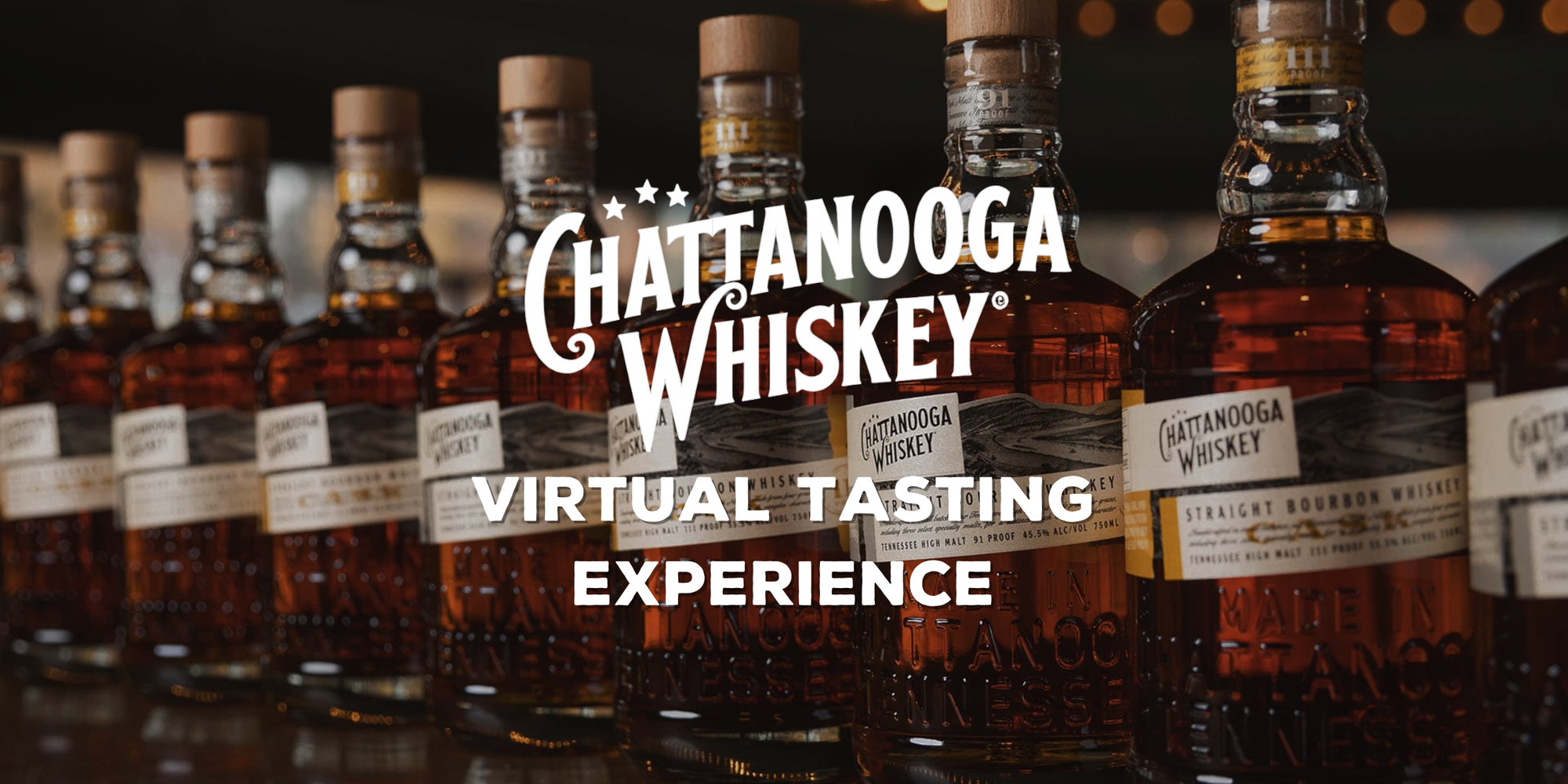
Last night Tim Piersant, founder and CEO of Chattanooga Whiskey, joined us for our community virtual tasting. Turns out we share an anniversary. Chattanooga Whiskey turns 15 this month, and Bourbon & Banter hit 15 back in July. My first taste of their whiskey was the 111, and my review went up on September 11, 2019, about a month after it launched. This one was a long time coming.
Tim started the company in October 2011 in a state where distilling was still illegal in most of its 95 counties, thanks to a law dating back to 1915. So he did what a lot of folks did back then and started with sourced whiskey: a 75/21/4 bourbon from what was still Lawrenceburg Distillers Indiana (before it became MGP), bottled as Chattanooga Whiskey 1816. While that sold in Tennessee, Georgia, and South Carolina, he ran the Vote Whiskey campaign, which ended up at the state Capitol. Governor Haslam signed the bill in May 2013, and Tennessee went from fewer than five distilling licenses to more than 50.
In 2014 Tim hired Grant McCracken, head brewer and head of R&D at Boston Beer, as founding distiller. Grant's background was specialty malts and roasted and toasted grains, and he talked Tim into building the whole brand around them. The Experimental Distillery has a 100-gallon pot still that makes about one barrel a week, and they put away a new recipe nearly every week. By the time the 50,000-square-foot Riverfront Distillery opened, they had more than 100 recipes using more than 100 specialty malts. They call the style Tennessee High Malt, which means everything they make is over 25% specialty malted grain. Tim's version: Chattanooga is dark chocolate to every other bourbon's milk chocolate.
Here's what we tasted.
If you'd like to review the tasting replay or join a future virtual community tasting make sure to sign-up as a Drinking Class member today.
Chattanooga Whiskey 91.
The flagship, and the winner of an actual barrel bracket. Once the experimental library was big enough, the team whittled it down March Madness-style, and Tim and Grant blind-tasted the final four. Barrel #91 took it. It's a four-grain bourbon: local yellow dent corn, malted rye, caramel malted barley, and honey malted barley. The corn comes from George McDonald, a fifth-generation farmer who works 6,000 acres and grows bourbon corn for nobody else. After aging, it goes into a 4,000-gallon white oak solera that holds roughly 100 barrels' worth at any time, which lets them marry whiskey from toasted barrels and char-only barrels about 50/50. Non-chill filtered, 91 proof, $34.99. I asked whether the proof was about the barrel number or about where the whiskey shines. The old 1816 Reserve was 90 proof, bumping it one to match the barrel was easy, and Tim was tired of four-digit numbers on his labels that nobody could remember. Fair enough. The website lists it at about 2 years old, but Tim says the base age is closer to three and a half now. Since a solera's age statement is set by the youngest whiskey in it, they're dumping and refilling it so the label can catch up.
Someone in the chat said it had great flavor even at 91 proof, and I agree. I've complained plenty about craft producers hiding young whiskey behind big proof. A craft flagship that holds up at 91 proof for $35 is exactly what I want to see more of.
Chattanooga Whiskey 111.
Same recipe as 91, minus the solera. It's bottled unfiltered at 111 proof, and there's a quarter-sized clump of char sitting in the bottom of pretty much every bottle on purpose. Barrel entry rotates between 113, 115, and 117, so 111 lands awfully close to cask strength. They call it a single batch, meaning a single fermentation. Each of their 3,000-gallon open-top fermenters runs cold for seven days and yields about eight barrels, and those barrels stay together all the way to the bottle. Retail is $46.99. Tim joked that a few years ago, when everyone was charging $100 for cask strength, they looked like geniuses. They still look pretty smart to me. This has been my favorite of their lineup since 2019, and the chocolate-covered cherry I wrote about back then showed up again right on cue. As for the name, it's the proof. Although Highway 111 does connect the distillery to the farm.
Bottled-in-Bond, Spring 2022.
Chattanooga releases spring and fall vintages every year, and the fall 2022 just came out. Most bottled-in-bonds are a flagship recipe with a bond label slapped on it. Chattanooga blends several recipes from a single distilling season, then has the team blind taste them and decide whether they lean spring (fruitier, lighter) or fall (darker, richer). Tim admits it's the spring version of roasted and toasted, so calibrate accordingly. This one is unusual because it's only two recipes: 80% of the 91 recipe and 20% of SB112, which is yellow corn, malted rye, and three malted barleys (Carabohemian, CaraAroma, and extra dark caramel). I looked a couple of those up mid-tasting. They're German. We'll leave it at that. Retail is $52.99.
Single Barrel, 116.7 Proof.
A wheated recipe: 75% yellow corn and 25% malted wheat, typically a mix of three wheat malts, including chocolate and caramel. Ours came out of a char 3 barrel with a light toast (Tim and I found it together on their single barrel page, which has more data on it than you want to read three pours in). About four and a half years old, with their single barrels ranging from four to six. Retail is $64.99. Tim tried to start a guess-the-proof game until I told him it was printed on our bottles. This was my first Chattanooga single barrel, and it was the first pour of the night to give me a whiskey hug. They've done about 60 single barrels recently, which Tim called astronomical for them. Four Roses would call it a Tuesday.
A few other things worth flagging
Tim is serious about transparency. Every recipe is broken down on their website, and if you have a truly geeky question about a specific malt, email info@chattanoogawhiskey.com. Grant will answer it. Their closest maltster is Riverbend Malt House in Asheville, the same one that came up during our Leiper's Fork tasting last month.
All the aging happens in Chattanooga: about 5,000 barrels at the distillery, another 1,500 across the street, and around 200 experimental barrels at any given time. The Experimental Distillery has filled more than 550 barrels over the past decade, and they've scaled up roughly four dozen of those recipes at Riverfront. The oldest thing they've ever sold is 7 years. They did hold on to their very last MGP barrel until it hit 16, then moved what little was left into a stainless tank.
They also have a playful streak, called Project Pop. Intergalactic Comet Crusher is a Hitchhiker's Guide to the Galaxy nod with 42 botanicals, somewhere between whiskey and gin. Tim says to keep it in the freezer. Next up is Bad Chattanoogan, a Pulp Fiction tribute with packaging modeled on Samuel L. Jackson's wallet. It's a Tennessee whiskey that goes through sugar maple charcoal and then rests with playable records cut from sugar maple wood. Tim says they don't sound good, but they do play. Only 700 cases, due at the end of this month. There's also a Honey Hot Toddy experimental made with local honey, possibly out by late November.
If you're heading to Chattanooga, Riverfront just started tours for the first time. The Full Proof Tour runs Tuesday through Thursday, only two a day, costs $40 for about two hours, and includes a flight of four single-barrel pours. The big draw is filling your own bottle of 91 straight from the solera at full proof. The bottle costs extra. So close to amazing. Still a good deal. Founders, their annual blend of all three solera barrels, gets a release party every April. And Tim made a nice offer: if you were on this tasting, email info@chattanoogawhiskey.com before you visit, mention it, and they'll comp you an Experimental Distillery tour.
Chattanooga is in 30 states, from Colorado east and from Massachusetts down to the Keys. Virginia, West Virginia, Pennsylvania, and Nebraska are holdouts, and so is California, but you can order online through the link on their website.
On the community front, Cesar asked whether the corn comes from Old McDonald's Farm. Cesar likes to stir things up. We deleted it and moved on.
Thanks to Tim for the time, and to the Chattanooga team for donating the whiskey for our tasting kits. Fifteen years ago, Tim couldn't legally make whiskey in his own county. Today his flagship costs $35 and sits on top of 550 experimental barrels. Go see him.