
The Neck Pour Debate Might Be Over—Thanks to a New Packaging Innovation
“There’s a lot of interest in premium bourbon, but not everyone wants to hunt or pay secondary prices. A format like this gives people a legitimate way to engage with the brand.”

For years, bourbon drinkers have debated whether the first pour from a freshly opened bottle tastes different from subsequent pours. Whether driven by chemistry or perception, the idea of the “neck pour” has become ingrained in whiskey culture.
And for brands trying to build long-term loyalty—especially with newer consumers—that kind of friction matters.
As one industry consultant put it:
“When someone finally gets a hard-to-find bottle, the first experience needs to be right. If there’s even a perception that it improves later, that’s a missed opportunity.”
Looking to Solve Two Challenges at Once
Sources familiar with upcoming innovation efforts indicate that Blanton’s is preparing to address both accessibility and the neck pour conversation through a new packaging format.
Internally referred to as “Baby Blanton’s,” the concept focuses on creating a smaller, more approachable version of the brand while rethinking how the product is delivered to the consumer.
The initiative is said to have two primary goals:
- Increase access to the brand through smaller format offerings
- Eliminate variability in the first pour experience
A New Format Inspired by Ready-to-Drink Packaging
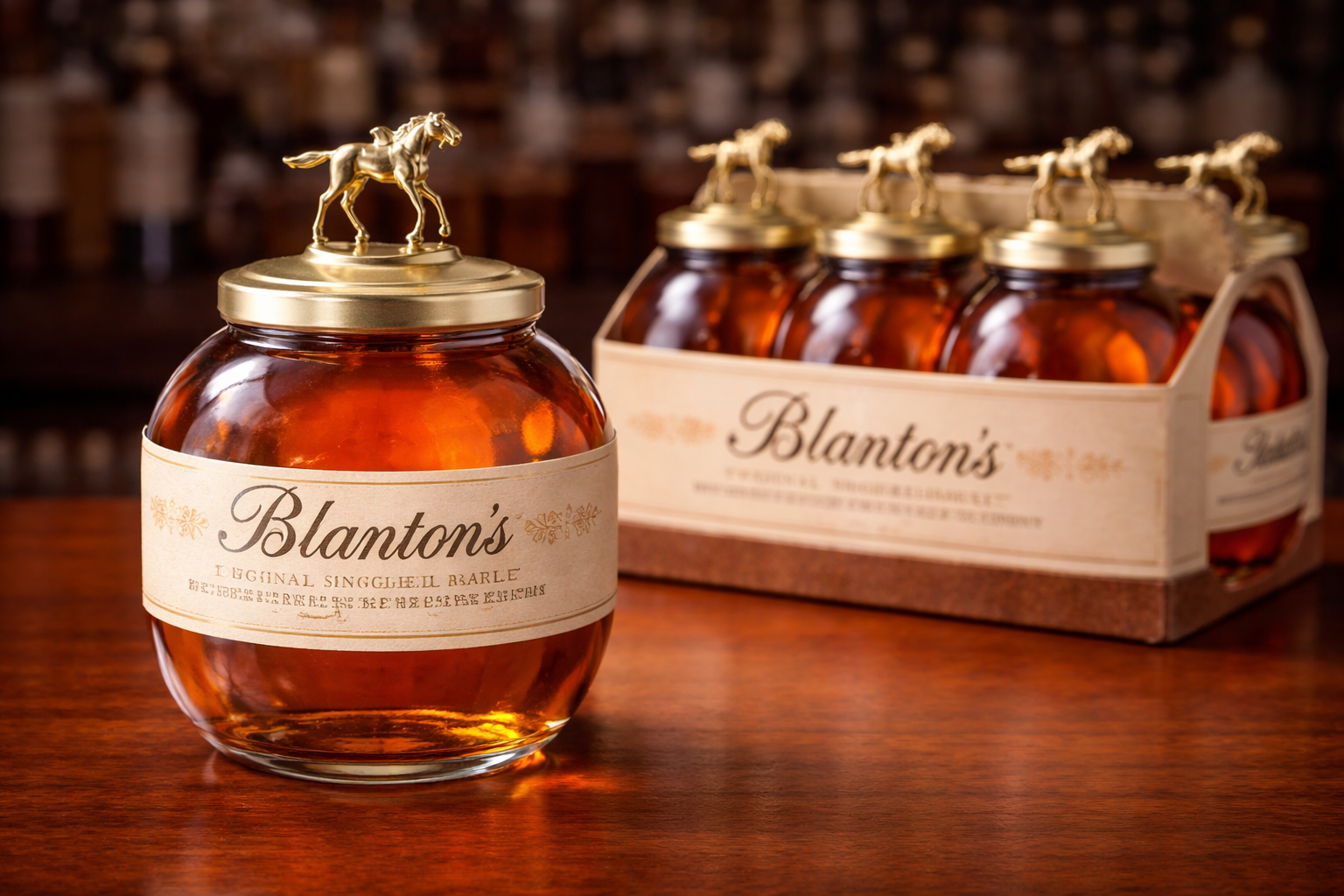
According to multiple sources, Blanton’s has entered into a licensing agreement with BuzzBallz to adapt elements of its packaging design for the new format.
Key details currently being shared include:
- Size: 200ml
- Closure: Pull-top opening system, eliminating the traditional bottle neck
- Packaging: Rounded, highly durable format designed for portability and consistency
- Topper: A redesigned, smaller-scale version of the signature horse and jockey, removable after opening
- Availability: Planned for both individual sale and six-pack configurations
- Pricing: Still being finalized, but expected to sit below traditional 750ml allocations on a per-unit basis
By removing the elongated neck entirely, the packaging is designed to deliver a uniform first pour—effectively sidestepping the long-standing debate.
Maintaining the Brand’s Signature Identity
Despite the shift in format, preserving Blanton's core identity appears to be a priority.
A brand representative, speaking on background, noted:
“The horse and jockey stopper is non-negotiable. It’s part of what makes Blanton’s recognizable around the world. The challenge was adapting that iconography to a new format without losing its character.”
To that end, each Baby Blanton’s unit will feature a scaled-down topper, proportioned to fit the new packaging while remaining collectible. Early indications suggest the brand will continue its well-known lettering system across releases.
A Strategic Response to Changing Market Conditions
While smaller format bottles are not new to the spirits industry, applying the concept to a highly allocated, premium bourbon brand represents a notable shift.
Industry observers see this as part of a broader move toward:
- Lowering barriers to entry for new consumers
- Encouraging trial without requiring a full-bottle commitment
- Improving first-use experience, especially for highly anticipated products
As one distributor commented:
“There’s a lot of interest in premium bourbon, but not everyone wants to hunt or pay secondary prices. A format like this gives people a legitimate way to engage with the brand.”
What Comes Next
While no official release date has been confirmed, sources indicate that test markets could be selected ahead of a broader rollout. The six-pack format, in particular, is expected to play a key role in early distribution strategies.
If successful, Baby Blanton’s could signal a new phase in how heritage bourbon brands approach packaging, accessibility, and the consumer experience—especially in a market that is becoming more competitive and more value-conscious.
For now, it’s a development that retailers, collectors, and everyday drinkers alike will be watching closely.