

At Wood Hat Spirits, better corn is the fulcrum of flavor
Gary Hinegardner has a problem with bourbon makers. He says the No. 2 yellow dent corn used by the vast majority of American whiskey makers is a subpar grain never intended for the distillation of America’s native spirit.

Last year, BourbonBanter.com was invited to tour four Missouri distilleries and visit a whiskey shop specializing in craft distillery single barrels. This is the first in a series of five stories about that trip.
Gary Hinegardner has a problem with bourbon makers. He says the No. 2 yellow dent corn used by the vast majority of American whiskey makers is a subpar grain never intended for the distillation of America’s native spirit.
How so? Hinegardner, the founder of Wood Hat Spirits in Florence, Missouri, said it contributes little flavor and arguably no complexity to whiskey. Its lone assets, he added, are abundance, affordability and high alcohol yield. While that’s good enough for most distillers, Hinegardner said it’s not for him.
“I look at it this way: If your business is a winery, the first thing you talk about is your grapes, because they’re so important to making wine,” Hinegardner said. But “most (bourbon makers) don’t even talk about the corn they use. They just get the same corn everybody else does.
“Yet bourbon is all about the corn! Well, and the barrel—but we don’t have much control over the barrel. We do have control over the corn.”
A trained agronomist, Hinegardner is intimately familiar with plants in general, but corn especially. When working with The Peace Corps decades ago, he helped grow corn on three continents—a task that didn’t always come easily or yield flavorful results. To one country he brought a hybrid corn that produced four times the yield of the varietal its people already grew. Problem was, they told him, it tasted horrible.
“Flavor and yield … yeah, those two have to balance out,” Hinegardner allowed with a slight grin. “Taste is so important to humans. So, when you change a corn, you change the whiskey and it's very significant. That's kind of where I started with Wood Hat.”
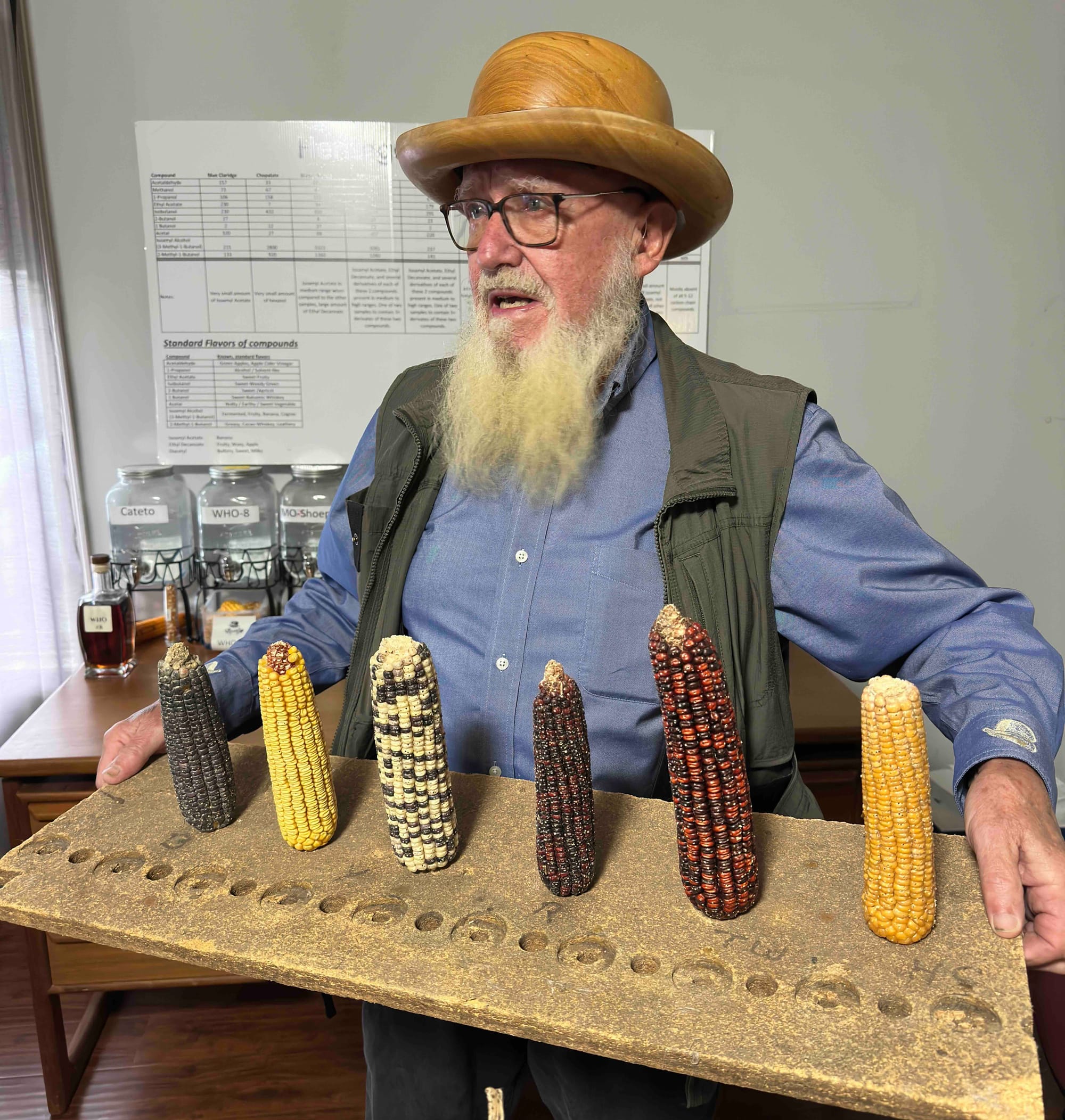
After a long career with Independent Stave Co., he started Wood Hat in 2012. Eager to control his whiskey making process from grain to glass, he and his small but mighty team have planted and harvested more than 100 hybrid corn varietals, distilled them and studied their performance to evaluate the unique characteristics of each.
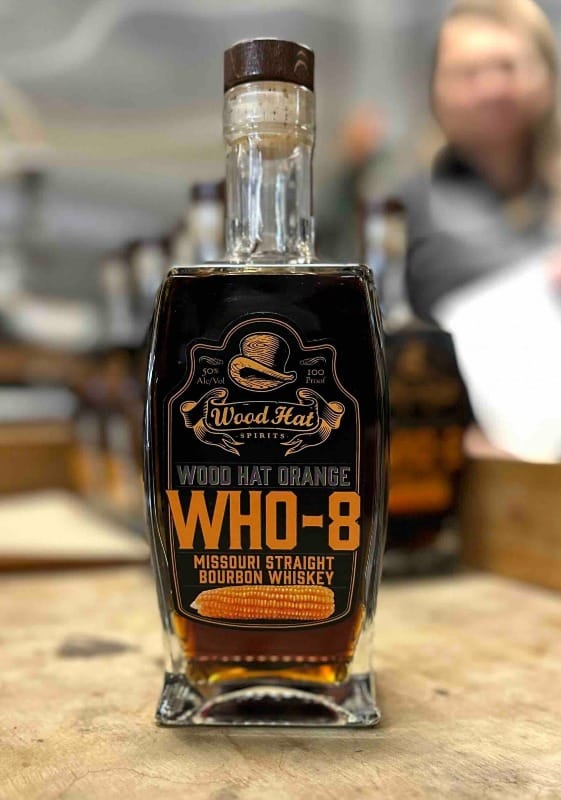
Working with blue corn, bloody butcher and obscure varietals such as orange flint, he’s created a broad line of whiskies made from flavorful corn.
“So what Wood Hat has done is really be kind of a research project with corn. And as long as I get enough money out of that to pay the help, I'm happy with that,” he said. “We never intended to be a big bourbon producer here, but we just decided we would look at the options we have in corn.”
If there’s any argument about corn, he said history is on his side.
In the past, “when you made whiskey to sell to your neighbors, you were damn picky about the corn,” said Hinegardner, who wears a distinctive wood hat that he turned on a lathe himself. He’s perfected his wood-turning hobby over five decades. “We’re like that. The stuff we’re doing here are things we don't always have language for.”
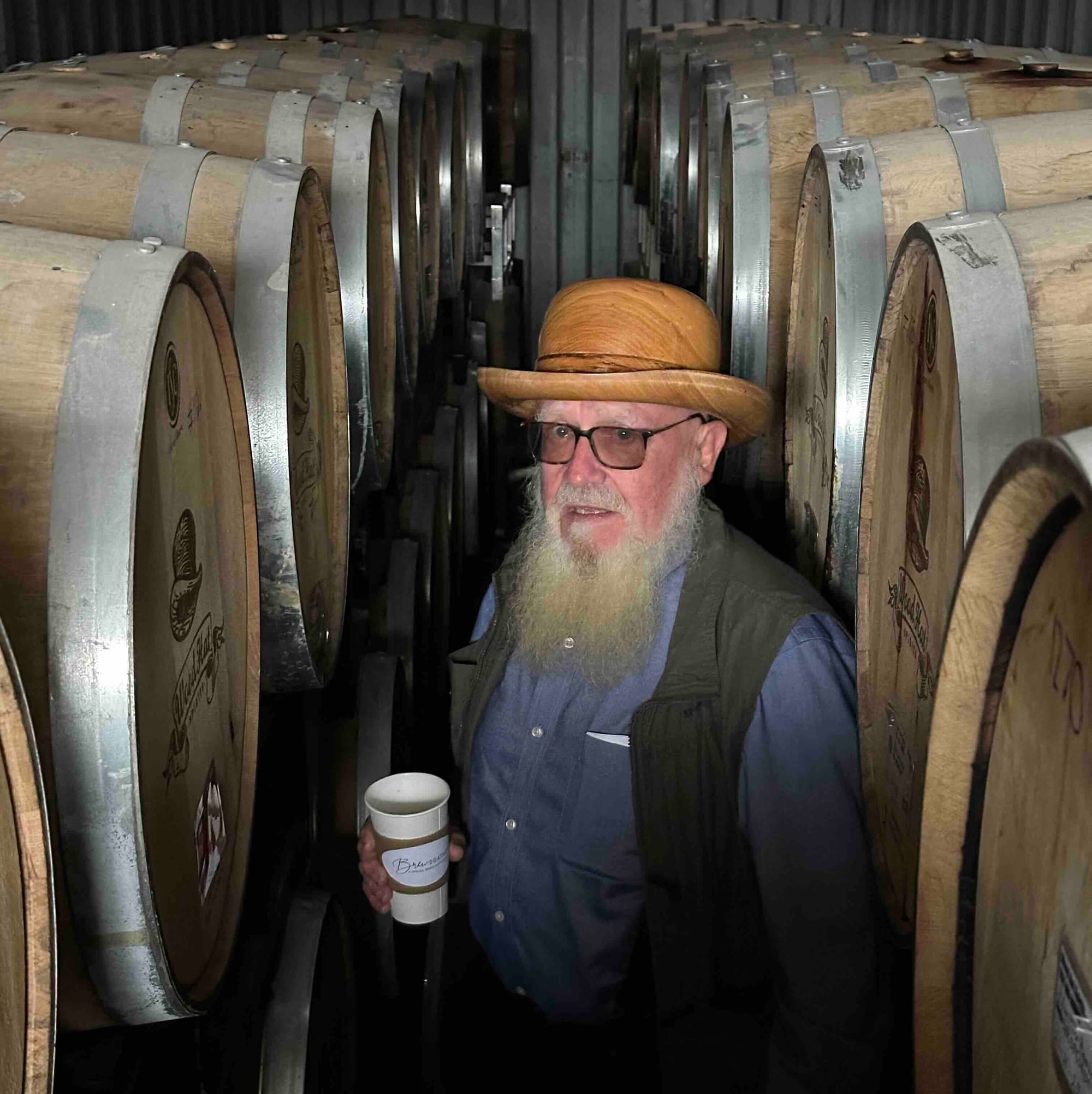
Behind Wood Hat’s distillery and welcome center sits a collection of farm equipment and the field in which those machines operate. It’s in that field that his unique corn varietals are grown and harvested. Nearby is a wood-fired boiler that heats oil used to heat water required for mashing and distilling, and an array of shipping containers used as aging houses for many barrels of whiskey.
Each shipping container contains rows of barrels along each side, creating an aisle between them barely large enough for Hinegardner to turn around within it. Missouri’s hot summers push whiskies housed in such metal structures deep into the staves of 15- and 53-gallon barrels. The state’s cold winters, Hindgardner said, create the opposite effect and, ultimately, balance out the high extraction of hotter months.
“I think we’ve got it figured out,” he said, referring to his low-tech aging tools. He was one of several who played a role in getting the term, “Missouri Bourbon” passed and defined by that state’s legislators. Distillers using it must use corn from the Show Me State, and make it and age it there. “We’re proud of it. We’ve demonstrated we can make good bourbon in Missouri.”