

Distiller Chip Tate's Ampersand Project Is Tasty and Innovative
"This is almost like doing a menu as a chef," said Chip Tate. "In some ideal world you want everyone to love everything, but that doesn’t happen. ... Variety is important to consumers."

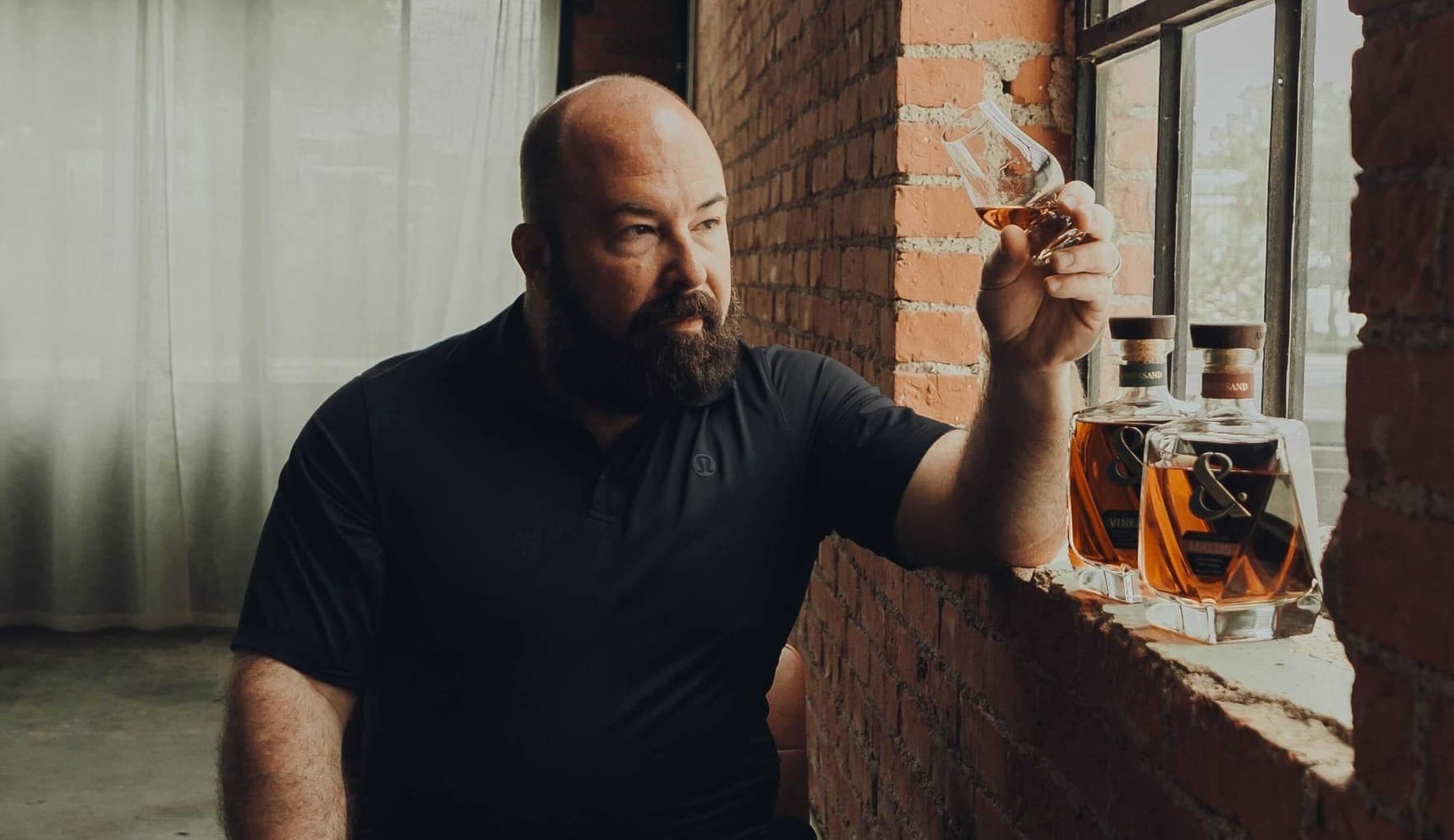
Chip Tate is at it again, creating a new whiskey program. Apparently, it's in his genes, so doing this repeatedly seems his destiny.
His great grandfather started Tate & Sons Distillery in 1919 near McKinney, Texas, until Prohibition killed the infant business in the cradle. The gap between that venture and Chip Tate's work in distilling lasted about eight decades. Work at Sazerac distilleries in Kentucky taught Tate the basics of whiskey making and blending, and then he started out on his own with the revival of the family brand, Tate Whisky, maker of Tate's Hell-Texas Straight Bourbon.
He's best known for co-founding Balcones Distillery in 2008 in Waco, Texas, where he created the well-known Balcones Baby Blue made with blue corn. But as partnerships sometimes do, his run there ended four years after disagreements over creative control.
A year later, he was distilling at Ironroot Republic Distillery in 2013 in Denison, Texas, where his whiskies garnered multiple awards ... before he moved along again.
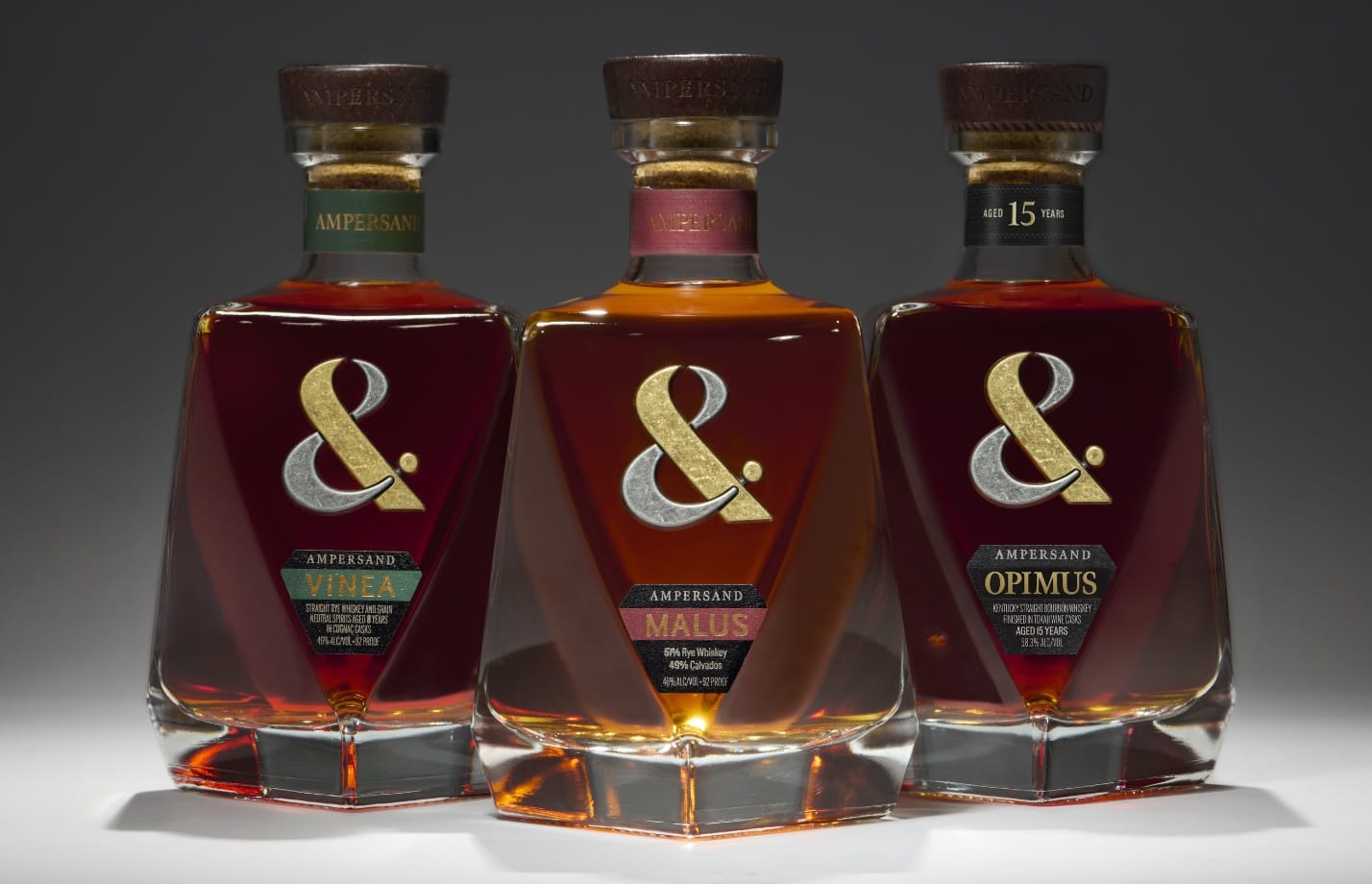
In 2024, he joined Foley Family Wines & Spirits as master distiller for innovation, and in 2025, created the Ampersand Whiskies collection, which features three small batch spirits:
Ampersand Malus ($59 MSRP for a 750ml bottle), a blend of 51% American Rye Whiskey and 49% Calvados brandy.
Ampersand Vinea ($59 MSRP for a 750ml bottle), a blend of 75% American Rye Whiskey, 25% grain neutral spirit aged 7 years in XO Cognac casks.
Ampersand Opimus ($150 MSRP for a 750ml bottle): 15-Year-Old Kentucky Bourbon Finished in Tokaji barrels from Hungary.
I got the chance to drink these and talk to Tate on Zoom about their creation. While family heritage inspires him to make whiskey, Tate says his quest for flavor took root first in food. An avid cook from the time he was 12, Tate's flavor migration led him to brewing, into which he intended to go pro. The brewery proper, however, never materialized. But making beverage alcohol eventually led him to cofounding Balcones.
But since we're here to discuss Ampersand, let's let Tate do more of the talking.
"It’s a concept brand. The idea is to kind of be a little bit of Skunk Works for me, to put together things that don’t normally go together," he said.
That includes aging grain-neutral spirits (GNS) in Cognac barrels for 9 years. Deciding how to balance out the impact of the intense Texas heat on the GNS, he blended it with 8-year-old rye whiskey.
The combination is a unique one in mind and result, and I asked why do anything with GNS outside of gin and vodka? He said he had the barrels and the GNS, so why not do an experiment.
The result is fruity–thanks to those Cognac casks–and rye forward, as if the rye was finished in a secondary wine cask. For whiskey drinkers who might not like rye, this is a good gateway to rye whiskey. It's simple, grain forward, clean and approachable at 92 proof. The GNS likely accounts for its almost indiscernible finish. I never disliked it, but it had to grow on me and it did. I appreciate it for what it is.
"The drinking experience at the same proof, 92, as Malus, isn’t as great," he said, adding that he's still pleased with the way it turned out. "I’m not going to age whiskey in Cognac barrels for 9 years again though!"
And since he mentioned Malus, let's go to the second of the trio. Far fruitier and more dynamic than Vinea, Malus is Latin for a genus of apple trees. It is a blend of 51% rye and 49% Calvados, the delicious and potent French apple brandy.
For me, ripe fruit is really pronounced with red and golden apples leading. It moves to pleasant herbal notes such as mint and menthol, before shifting quickly back to fruit and then spice. I thought it quite nice, really. Tate agreed, saying he appreciated the fruit bouquet as much as the liquid's fruit impact. It's a clever blend of spirits I've never tasted before, and it makes me wonder why others haven't tried it.
The final bottle is Opimus, Latin for rich or abundant. This is a 15-year-old Kentucky bourbon whose mash bill is 75% corn, 13% rye and 12% malted barley. That's a classic Jim Beam mash bill, but my palate could not conclude that it is. The current tater unicorn, Buff Turkey bottles, share that mash bill, so who knows? What I do know is this is really good.
Visually, it's darker than a horror novel and complex as a 3-D puzzle. It drinks perfectly at 116.6 proof, and the list of aromas on offer is long: tart grapes from the Hungarian Tokaji barrel, honey, cooked corn, cigar leaf, confectioner’s sugar, black peppercorn and Honey Comb breakfast cereal. On the palate it's dark-fruity (the wine cask was generous with its influence) and offset nicely with tannin that renders those fruit flavors more vibrant and defined. The more I sipped it, the more wine-juicy it got. Simply outstanding ... which it should be for $150.
"This is almost like doing a menu as a chef," Tate began. "In some ideal world you want everyone to love everything, but that doesn’t happen. ... People tend to lean toward one end of a spectrum, so hardcore bourbon guys will go to Opimus, while some will lean toward Malus or Vinea. ... Variety is important to consumers."